ALL BENGALI JEWELLERY WORKERS WELFARE TRUST
The manufacturing process starts with acquiring raw materials. This includes precious metals such as gold, silver, platinum, as well as gemstones, pearls, and other decorative elements. These materials are sourced from suppliers who provide them in various forms such as ingots, sheets, wires, or pre-cut gemstones.
The finalized jewelry design, typically in the form of detailed CAD (Computer-Aided Design) models, is transferred to the manufacturing facility. This can be done electronically or by providing physical prototypes or drawings to guide the production process.
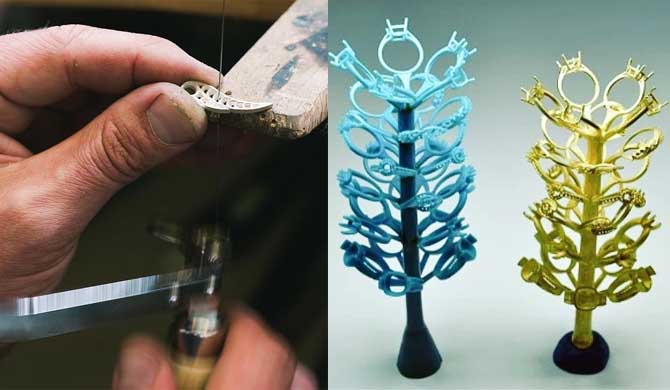
For complex designs or designs with intricate details, the casting process may be employed. This involves creating a mold of the jewelry piece using materials such as silicone or wax. Molten metal is then poured into the mold to create the final shape. After cooling and solidification, the jewelry piece is removed from the mold and further processed.
For jewelry made from metals like gold or silver, metalwork is a crucial step. Skilled artisans use techniques such as cutting, shaping, soldering, and welding to form the metal into the desired shape and structure. This may involve using hand tools or specialized machinery.
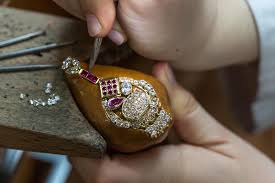
If the jewelry design includes gemstones or diamonds, stone setting is performed. This requires precision and skill to securely set the stones into the metal framework. Common stone setting techniques include prong setting, bezel setting, pave setting, and channel setting.
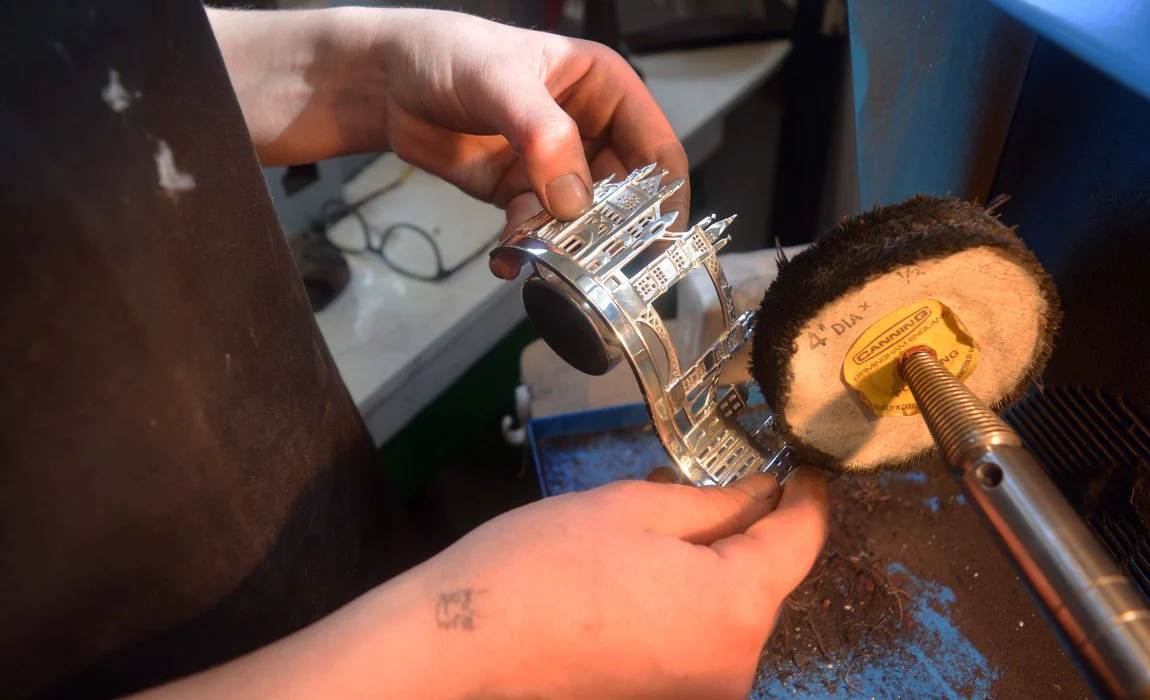
Once the metalwork and stone setting are complete, the jewelry piece undergoes polishing and finishing processes to enhance its appearance. This includes smoothing rough edges, buffing the surface to a high shine, and applying any desired surface treatments such as plating or oxidation.
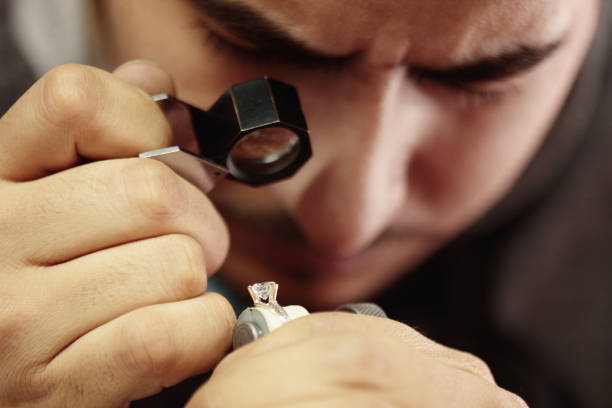
Throughout the manufacturing process, rigorous quality control measures are implemented to ensure each jewelry piece meets specified standards. Inspections are conducted at various stages to check for defects, accuracy of dimensions, and overall craftsmanship.
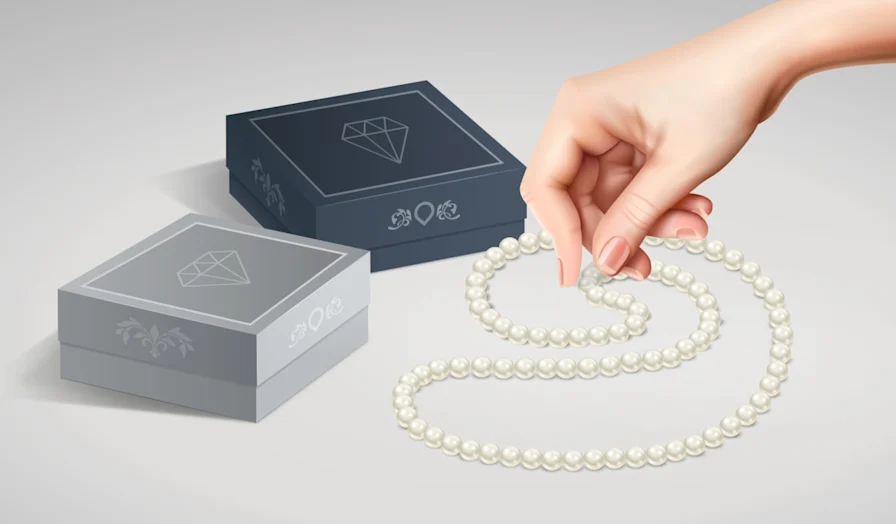
After completing the manufacturing process, each jewelry piece undergoes a final inspection to ensure it meets quality standards. Once approved, the jewelry is carefully packaged, often in branded packaging, ready for distribution and sale.